Agriculture During War
War impacts more than just borders and geopolitics — it disrupts the very foundation of human survival: food and agriculture. Whether it’s historic wars of the 20th century or contemporary conflicts involving major powers, the effects on farming, food systems, and global trade are profound and far-reaching.
In recent years, conflicts such as the Russia-Ukraine war showed how war can disrupt global grain supplies, inflation, and global food security. Today, another geopolitical crisis — involving Iran, Israel, and the United States — is adding a new layer to how war can affect agriculture, supply chains, and farming communities.
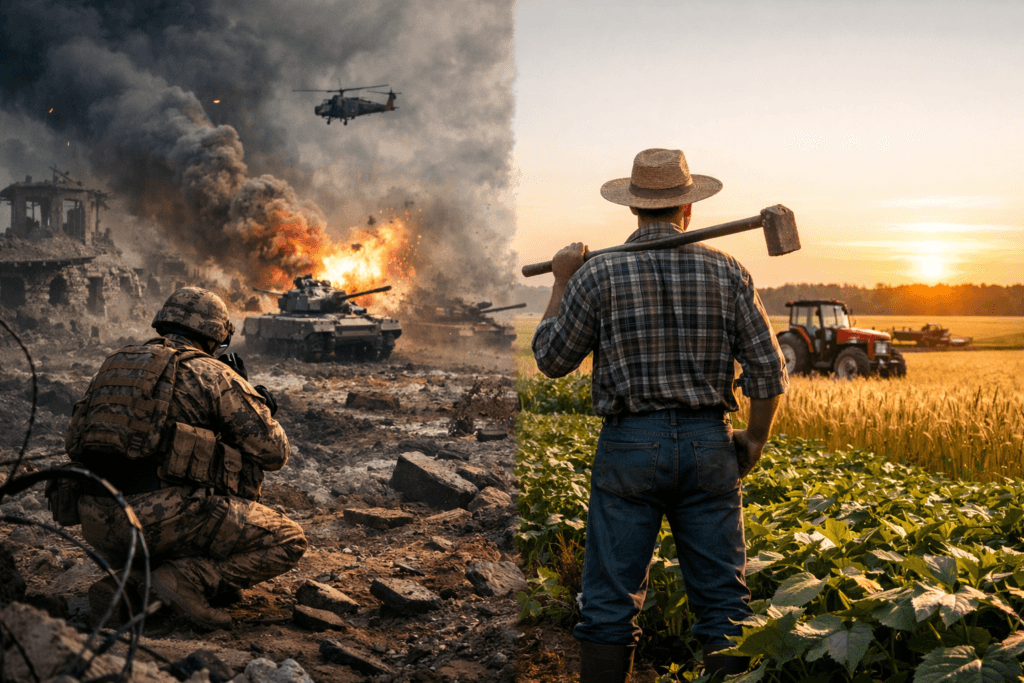
The Relationship Between War and Agriculture
Across history, wars have repeatedly shown the vulnerability of agriculture:
- Fields destroyed
- Farmers displaced
- Supply chains cut
- Trade routes blocked
- Input shortages (seeds, fertiliser, fuel)
Agriculture relies on predictability — predictable seasons, supplies, and markets. War shatters that.
Lessons From History
World War I and II
In both World Wars, food was weaponised and rationed. Nations imposed strict controls to ensure supply for soldiers and civilians. Farming mechanisation and innovations in food preservation were partly driven by wartime needs.
Vietnam War and Middle Eastern Conflicts
Bombing campaigns and chemical use devastated farmland. Rural communities were uprooted. Food security collapsed in many areas.
These historical lessons show that agriculture is always among the first sectors affected in war — and often one of the slowest to recover.
The Iran–Israel–US Conflict and Its Agricultural Ripple Effects
The ongoing escalation involving Iran, Israel, and the United States has triggered military confrontations, sanctions, and fears of broader regional instability. For example, recent airstrikes and missile exchanges have led to civilian displacement and panic buying of staples inside Iran.
Why This Matters for Agriculture
Even if battlefields are thousands of kilometres from major farming regions, this conflict affects agriculture in three major ways:
1. Food Security in Conflict Zones
In countries like Iran, fear of war and economic instability has already pushed food prices higher, and strategic reserves such as animal feed stocks are reported to be declining.
2. **Global Fertiliser and Input Supply Chains
India and many agricultural economies depend on imported inputs like fertilisers and oil that transit Middle Eastern shipping lanes. If maritime routes like the Strait of Hormuz become unsafe, shipments of fertilisers, fuel, and other agricultural chemicals can be delayed or rerouted, driving up costs for farmers.
This is not just an abstract risk — experts warn that if conflicts disrupt shipping chokepoints, fertiliser supplies and global agricultural input markets could be affected, similarly to how disruptions during the Russia–Ukraine war changed fertiliser and grain price dynamics worldwide.
3. **Trade Route Disruptions
Many agricultural exports, including rice, pulses, and processed foods destined for Middle Eastern or African markets, rely on secure maritime trade routes. Instability in the Gulf region increases shipping costs and insurance premiums, and can slow down deliveries. This puts pressure on farmers and exporters in major agricultural economies like India.
Beyond Regional Borders: Global Food Price Inflation
A conflict involving major powers can also trigger wider market uncertainty. Energy prices tend to rise during geopolitical crises as oil and gas markets react to instability. Higher energy costs push up costs for tractors, irrigations pumps, transport fleets, and food processing — and that ultimately pushes up food prices on global markets.
In some Middle Eastern markets, panic buying of staples has already been reported, not because of immediate shortages, but due to fear of shortages and inflationary expectations.
Short-Term Shock vs. Long-Term Transformation
⚡ Short-Term Impact
- Disrupted supply chains
- Price volatility in fertiliser and fuel
- Delays in export delivery
- Panic stockpiling
These shocks affect consumers and farmers alike.
🧠 Long-Term Impact
If a conflict becomes protracted, farmers may:
- Lose access to credit
- Abandon farmland
- Switch to less input-intensive farming
- Migrate from rural to urban areas
Policymakers must then balance immediate food supply concerns with long-term rural resilience and food system redesign.
How Nations Try to Protect Agriculture in Uncertain Times
Governments and international organisations use a range of tools:
1. **Food Reserves and Strategic Stocks
Maintaining grain reserves can buffer against temporary availability drops.
2. **Trade and Insurance Guarantees
Trade agreements and risk insurance help keep agricultural exports moving.
3. **Agritech Solutions
From precision farming to satellite monitoring, technology helps maximise output even under uncertain conditions.
The Bottom Line
Today’s agricultural systems are deeply interconnected with global geopolitics. A conflict like the one involving Iran, Israel, and the United States may seem regional, but its effects — especially on fertiliser access, fuel prices, and maritime trade routes — can be felt thousands of miles away by farmers in India, Africa, Europe, and beyond.
War and agriculture are inseparable, not just because of the direct effects on farmland, but because modern food systems depend on global trade, secure shipping routes, and stable economics.
Protecting agriculture during conflict isn’t just about feeding people — it’s about safeguarding the stability of nations and global food systems.
Agriculture During War: How Conflict Shapes Food Security, Farmers, and Global Stability
War impacts more than just borders and geopolitics — it disrupts the very foundation of human survival: food and agriculture. Whether it’s historic wars of the 20th century or contemporary conflicts involving major powers, the effects on farming, food systems, and global trade are profound and far-reaching.
In recent years, conflicts such as the Russia-Ukraine war showed how war can disrupt global grain supplies, inflation, and global food security. Today, another geopolitical crisis — involving Iran, Israel, and the United States — is adding a new layer to how war can affect agriculture, supply chains, and farming communities.
The Relationship Between War and Agriculture
Across history, wars have repeatedly shown the vulnerability of agriculture:
- Fields destroyed
- Farmers displaced
- Supply chains cut
- Trade routes blocked
- Input shortages (seeds, fertiliser, fuel)
Agriculture relies on predictability — predictable seasons, supplies, and markets. War shatters that.
Lessons From History
World War I and II
In both World Wars, food was weaponised and rationed. Nations imposed strict controls to ensure supply for soldiers and civilians. Farming mechanisation and innovations in food preservation were partly driven by wartime needs.
Vietnam War and Middle Eastern Conflicts
Bombing campaigns and chemical use devastated farmland. Rural communities were uprooted. Food security collapsed in many areas.
These historical lessons show that agriculture is always among the first sectors affected in war — and often one of the slowest to recover.
The Iran–Israel–US Conflict and Its Agricultural Ripple Effects
The ongoing escalation involving Iran, Israel, and the United States has triggered military confrontations, sanctions, and fears of broader regional instability. For example, recent airstrikes and missile exchanges have led to civilian displacement and panic buying of staples inside Iran.
Why This Matters for Agriculture
Even if battlefields are thousands of kilometres from major farming regions, this conflict affects agriculture in three major ways:
1. Food Security in Conflict Zones
In countries like Iran, fear of war and economic instability has already pushed food prices higher, and strategic reserves such as animal feed stocks are reported to be declining.
2. **Global Fertiliser and Input Supply Chains
India and many agricultural economies depend on imported inputs like fertilisers and oil that transit Middle Eastern shipping lanes. If maritime routes like the Strait of Hormuz become unsafe, shipments of fertilisers, fuel, and other agricultural chemicals can be delayed or rerouted, driving up costs for farmers.
This is not just an abstract risk — experts warn that if conflicts disrupt shipping chokepoints, fertiliser supplies and global agricultural input markets could be affected, similarly to how disruptions during the Russia–Ukraine war changed fertiliser and grain price dynamics worldwide.
3. **Trade Route Disruptions
Many agricultural exports, including rice, pulses, and processed foods destined for Middle Eastern or African markets, rely on secure maritime trade routes. Instability in the Gulf region increases shipping costs and insurance premiums, and can slow down deliveries. This puts pressure on farmers and exporters in major agricultural economies like India.
Beyond Regional Borders: Global Food Price Inflation
A conflict involving major powers can also trigger wider market uncertainty. Energy prices tend to rise during geopolitical crises as oil and gas markets react to instability. Higher energy costs push up costs for tractors, irrigations pumps, transport fleets, and food processing — and that ultimately pushes up food prices on global markets.
In some Middle Eastern markets, panic buying of staples has already been reported, not because of immediate shortages, but due to fear of shortages and inflationary expectations.
Short-Term Shock vs. Long-Term Transformation
⚡ Short-Term Impact
- Disrupted supply chains
- Price volatility in fertiliser and fuel
- Delays in export delivery
- Panic stockpiling
These shocks affect consumers and farmers alike.
🧠 Long-Term Impact
If a conflict becomes protracted, farmers may:
- Lose access to credit
- Abandon farmland
- Switch to less input-intensive farming
- Migrate from rural to urban areas
Policymakers must then balance immediate food supply concerns with long-term rural resilience and food system redesign.
How Nations Try to Protect Agriculture in Uncertain Times
Governments and international organisations use a range of tools:
1. **Food Reserves and Strategic Stocks
Maintaining grain reserves can buffer against temporary availability drops.
2. **Trade and Insurance Guarantees
Trade agreements and risk insurance help keep agricultural exports moving.
3. **Agritech Solutions
From precision farming to satellite monitoring, technology helps maximise output even under uncertain conditions.
The Bottom Line
Today’s agricultural systems are deeply interconnected with global geopolitics. A conflict like the one involving Iran, Israel, and the United States may seem regional, but its effects — especially on fertiliser access, fuel prices, and maritime trade routes — can be felt thousands of miles away by farmers in India, Africa, Europe, and beyond.
War and agriculture are inseparable, not just because of the direct effects on farmland, but because modern food systems depend on global trade, secure shipping routes, and stable economics.
Protecting agriculture during conflict isn’t just about feeding people — it’s about safeguarding the stability of nations and global food systems.